SHORT ANSWER
Trace the complete system from the crew position through clutches, winches, sheaves and boom to the sail tack and clew. Confirm every component against the boom and sailmaker instructions. A strong isolated block cannot correct a poor lead, incompatible line or unsupported reef cringle.
Three checks before you act
- 01Draw the line route and name every turning point.
- 02Record line, sheave, pin, attachment and reef geometry.
- 03Practice the maker's sequence under controlled low load.
Map the system before buying a component
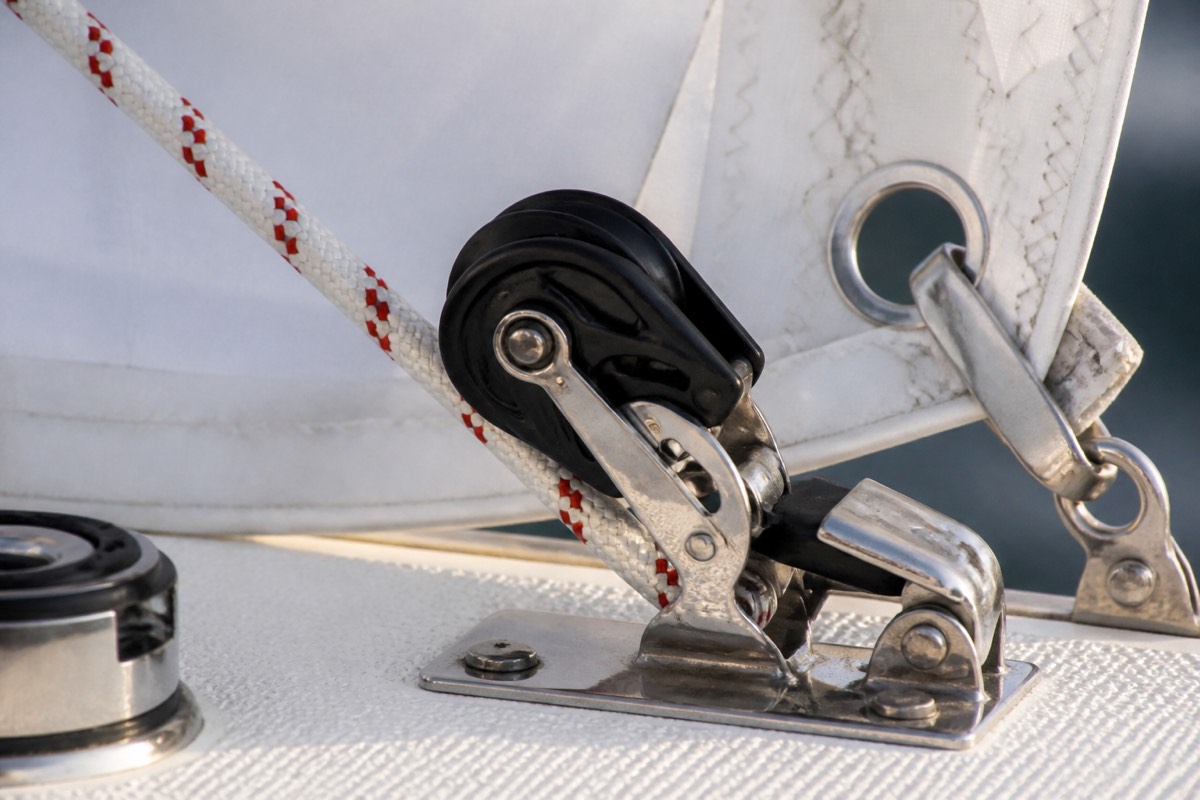
Begin at the operating position and follow each reefing line by hand and eye. Record clutch, winch, deck organizer, turning block, gooseneck sheave, internal boom route, boom-end sheave and attachment at the sail. Note whether the tack uses a hook, line or another fitting, and whether the clew line is tied around the boom, attached to a slider or led by a design-specific method. Seldén's sailmaker guide shows several arrangements because boom generation and section change the required geometry.
Photograph every lead from an angle that reveals alignment. A line can fit through a sheave yet rub a cheek, cross another line or enter at an angle that adds friction. Look for glazing, flattening, cover damage, metal dust, sharp edges and uneven wear. Turn sheaves without load and check for free movement or lateral play. Do not dismantle internal systems without the correct manual; crossed or incorrectly reeved lines can remain hidden until the reef is needed.
Compatibility is a chain
Line diameter must suit the sheaves, clutches and winches as well as the load and handling requirement. Pins and shackles must fit their attachments without side loading or sharp contact. Sail slides, reef cringles, tack hardware and clew arrangements must preserve the designed pull directions when the sail is reduced. Replacing one worn item with a stronger but larger part can alter articulation, chafe the sail or prevent a fitting from seating. Record model and dimensions before ordering.
The sail itself belongs in this inventory. Check the reef reinforcement, stitching, cringles, webbing and the path between them. Confirm that intermediate sail slides, bolt rope or luff hardware behave as the reef is taken. On some systems, a loose-footed sail needs a specific clew-line position; other systems use an eye slider or dedicated fitting. The correct answer lives in the boom and sail documentation, not in a generic diagram detached from both.
Test the sequence before the weather supplies the load
Practice alongside or in settled conditions with the boat secured as appropriate and the sail unloaded enough for the manufacturer sequence. Assign helm, halyard, reef line, sheet and confirmation roles. Watch each line and fitting during the full cycle, including shaking the reef out. A successful test ends with the sail supported correctly, loose line controlled and every clutch and stopper returned to its intended state. Record friction or confusion instead of normalizing it.
Repeat the inspection under modest sailing load only when the static check, instructions and crew preparation are complete. Reef early enough that observation remains possible. If the luff hangs, the clew rises unexpectedly, a line becomes bar-tight without completing the reef or a fitting distorts, ease and stop. Do not solve the symptom by increasing winch force. The fault may be lead, reeving, geometry, sail hardware or an obstruction that needs a rigger or sailmaker.
BOUNDARY
Friction is a warning, not a winch setting
Do not force a reefing system that binds or loads a fitting at an unexpected angle. Boom-specific instructions, sailmaker geometry and rated compatible hardware govern the route. Damage, uncertainty inside the boom or structural attachment concerns require professional inspection.
Connect the hardware map to the sail
Record components with the measurement tool guide, verify the rig baseline in mast tuning basics, and add reef points to the sail measurement sheet. Where fittings meet trapped salt water, the stainless fitting corrosion note separates the alloy question from the coating question. Reefing hardware is sized by load and by the cloth it serves, and the same habit of sorting gear by shelf and by material runs through other working kits. A golf fieldbook follows that method: shoe contact with the ground, protection of the gear in the bag, and clothing chosen by weather and calendar. The reefing page asks what a line and a block must hold; the golf page asks what a shelf and a material must carry. Both answer by naming the load first.
SOURCES AND DATE
Checked 25 August 2026. Seldén documentation demonstrates configuration-specific reef systems; no dimension or reeving path is transferred here without its matching boom.