SHORT ANSWER
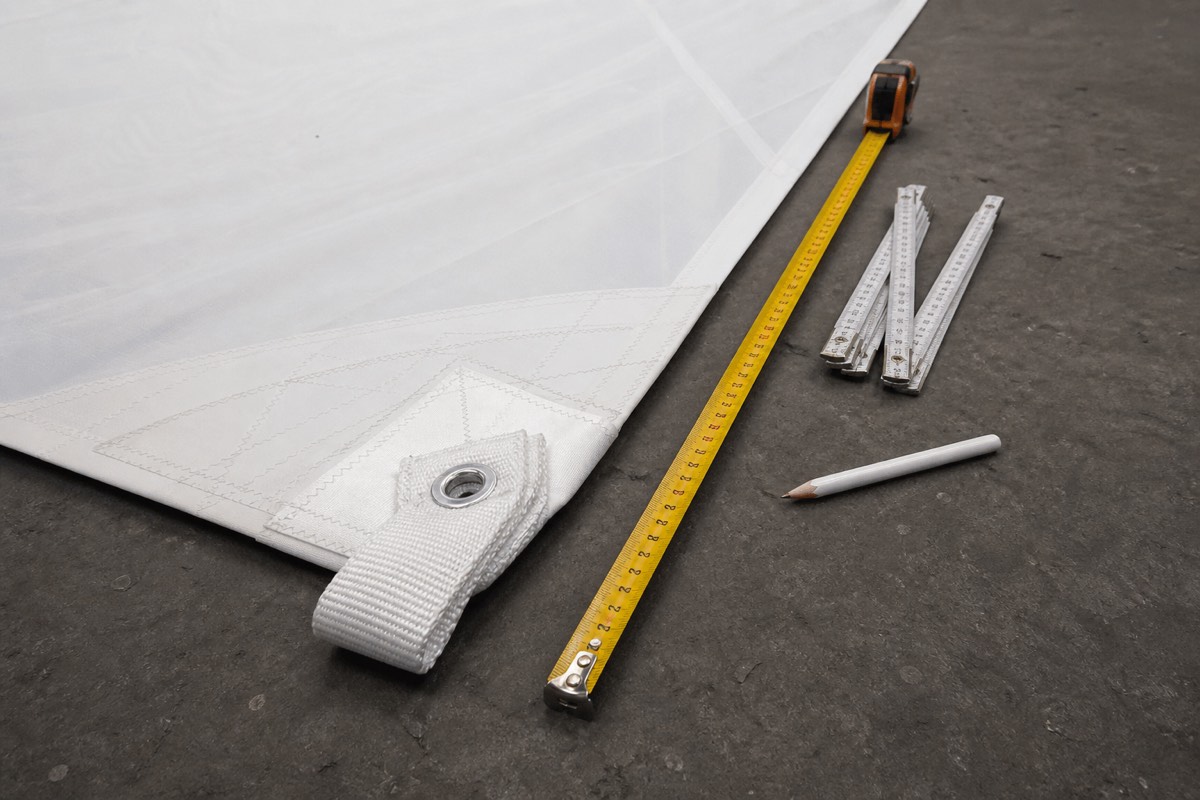
Measure from named reference points, keep the sail orientation clear, write down units and repeat any dimension that will drive a design or hardware choice. A measurement is only useful when another person can reproduce it.
Before the tape comes out
Identify the sail, boat, side and condition: loose on a clean floor, hoisted, or under a stated tension. Photograph the head, tack, clew, slides, reef points, battens and corner hardware. Note whether the sail is dry, stretched, recently repaired or carrying a cover.
The same measure-first rule governs smaller cordage: the woven cord project notes start every bracelet, fob and collar from a measured wrist, ring or neck rather than a guessed length.
A field sequence
- 01Name the point: head, tack, clew, luff, leech, foot or station.
- 02Record the unit and the tool. Do not mix a tape reading with a plan dimension without marking the difference.
- 03Take the paired dimensions the sailmaker or class form asks for, then repeat the critical one.
- 04Write an observation beside the number: seam, fitting, bend, crease, chafe or obstruction.
Photograph the interfaces
Overall luff, leech and foot figures do not explain how the sail connects to the rig. Add clear views of the headboard, tack and clew attachments, slides or bolt rope, reef cringles, batten receptacles and any cover or furling feature. Place a ruler beside local hardware and record the mast, boom or furler model when known. The Seldén sailmaker guide separates these interfaces by system because a similar-looking slide or reef arrangement can require different dimensions.
Recording units and repeating the critical number is not only for sails: face angle and club path shows the same four-column log keeping a practice honest.
Resolve disagreement before sending
Repeat critical readings from the same named points. If two attempts disagree, inspect the tape path, endpoint, sail tension and movement instead of averaging the values. Keep raw readings and mark any later conversion. Send the completed form, sketches and photographs as one dated package, with a list of unknowns. Retain an unchanged copy so a follow-up request creates a second traceable observation rather than silently replacing the first.
BOUNDARY
Numbers do not certify a sail.
A loft may need additional measurements, class rules, rig geometry or a physical inspection. Send the complete note and photos rather than a single attractive number.
SOURCES AND DATE
Checked 25 August 2026. The handoff sequence follows system-specific sailmaker documentation and keeps every unknown visible.